
Having an air conditioner that’s not blowing cold air is one of the most frustrating issues for homeowners in Singapore, especially with the country’s constant heat and humidity. Whether you’ve set your thermostat to a cool temperature or expected a refreshing breeze, a malfunctioning aircon can lead to uncomfortable indoor temperatures. Understanding why is my aircon not cold is the first step toward fixing the issue. In this guide, we’ll explore the common causes behind why your aircon isn’t blowing cold air, how to troubleshoot the issue, and when it’s time to call in a professional.
Common Causes of Aircon Not Blowing Cold Air
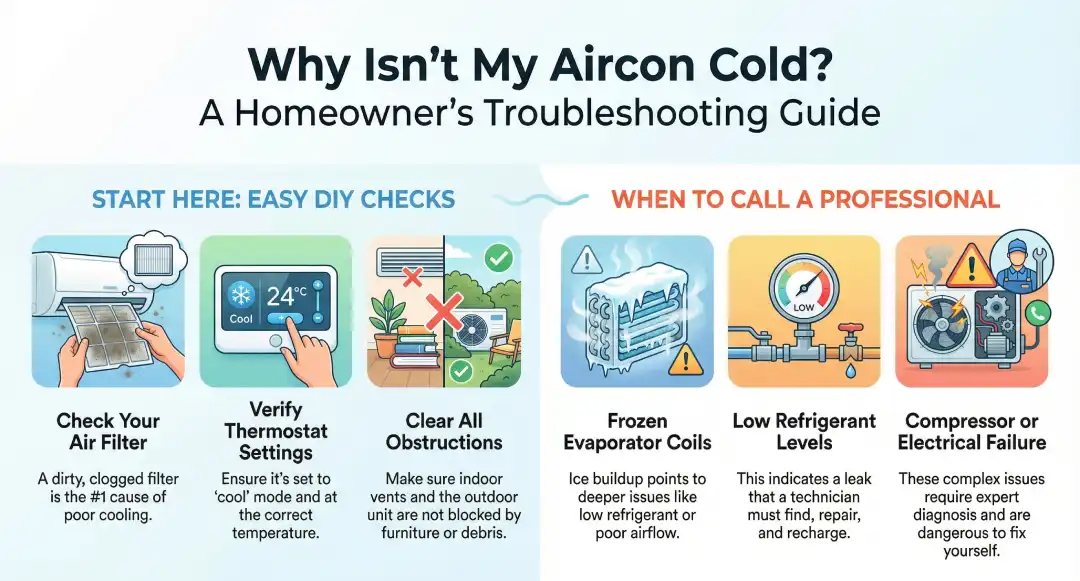
1. Dirty or Clogged Air Filter
One of the most common reasons why your aircon isn’t blowing cold air is a dirty or clogged air filter. The filter is responsible for trapping dust, dirt, and other debris that would otherwise enter the system and affect its performance. Over time, the filter can become clogged, reducing the airflow and making it harder for the air conditioner to cool the room.
A clogged filter restricts airflow, forcing the aircon to work harder to circulate the air. This not only affects the cooling performance but also puts undue stress on the system, which could eventually lead to more significant problems like frozen coils or overheating.
Solution: Regularly clean or replace your air filters every 1-3 months, depending on usage. If your aircon is used frequently, it’s crucial to clean the filters more often to prevent them from getting clogged and reducing cooling efficiency.
2. Low Refrigerant Levels
If your aircon is not blowing cold air anymore, it could be due to low refrigerant levels. Refrigerant is the substance that absorbs heat from the air inside your home and releases it outside. If the refrigerant is low due to a leak or improper filling during installation, the aircon won’t be able to cool effectively.
A refrigerant leak is a common problem that can prevent your system from reaching the desired temperature. When the refrigerant is low, the system is forced to work harder, consuming more energy and increasing the risk of other mechanical failures.
Solution: If you suspect low refrigerant levels, it’s best to call a professional to inspect and recharge your air conditioner. Don’t try to refill the refrigerant yourself, as it requires special tools and expertise to ensure the correct amount and type are used.
3. Frozen Evaporator Coils
The evaporator coils inside your air conditioner are responsible for absorbing heat from the air. However, if these coils freeze, your aircon will struggle to cool the air properly, causing a lack of cold airflow. Freezing can happen due to a variety of reasons, such as low refrigerant levels, poor airflow, or dirty coils.
When the evaporator coils freeze, the system’s efficiency drops, and the aircon will blow warm air or no air at all. This problem often happens when the air filters are clogged or the airflow is restricted, causing the refrigerant to remain too cold and freeze the coils.
Solution: If you notice that your aircon isn’t blowing cold air and there’s ice buildup on the coils, turn off the system immediately and let it thaw. Once the coils are thawed, clean the filters and check the airflow. If the problem persists, it’s best to contact a technician to address the issue, as it could be related to refrigerant levels or mechanical failures.
4. Thermostat Problems
A faulty thermostat is another reason why your aircon may not be blowing cold air. The thermostat controls the temperature inside the room by regulating the cooling process. If the thermostat is malfunctioning or miscalibrated, it may not detect the correct temperature, causing the air conditioner to stop cooling properly.
For instance, if the thermostat is set incorrectly, or if the temperature readings are inaccurate, the aircon may not run long enough to cool the room to the desired temperature. This can make it seem like the aircon is not cooling properly.
Solution: Check the thermostat settings to ensure it is set to the correct temperature. If the thermostat seems to be malfunctioning, it may need recalibration or replacement. If you’re unsure, contacting a professional technician can help identify the issue and resolve it.
5. Compressor Issues
The compressor is a vital part of the air conditioning system that compresses the refrigerant and circulates it through the system. If the compressor is not functioning properly, your air conditioner will not blow cold air because it won’t be able to circulate refrigerant through the system.
Compressor issues are often caused by electrical problems, overheating, or physical damage. When the compressor fails, the system cannot absorb or release heat efficiently, resulting in warm air being blown from the vents.
Solution: If you suspect a compressor issue, it’s important to contact a professional technician immediately. Compressor repairs or replacements can be costly, but they are necessary to restore the aircon’s cooling ability.
Less Obvious Causes Many Homeowners Miss
1. Clogged Drain Line
A clogged drain line is one of the most overlooked causes of air conditioner problems. When the drain line becomes blocked, water backs up inside the unit, causing it to shut down or stop cooling effectively. In Singapore’s humid environment, mold and algae can build up in the drain line, worsening the situation and potentially affecting indoor air quality. Regular maintenance and clearing of the drain line can prevent these issues.
2. Electrical Component Issues
Electrical issues, such as capacitor problems and faulty PCBs, are often silent threats to your air conditioner’s functionality. A faulty capacitor can prevent the system from starting, while damaged wiring or a malfunctioning PCB can lead to intermittent cooling or complete system failure. These issues are complex and require professional diagnosis and repair to ensure safe and efficient operation.
3. Incorrect Aircon Size for the Room
An air conditioner that’s too small for the space it’s cooling will struggle to maintain the desired temperature, causing it to overwork and consume more energy. Common installation mistakes, such as incorrect room size calculations, often lead to aircon size mismatches, leading to poor cooling performance and higher energy costs. Choosing the right-sized unit is crucial for optimal efficiency.
4. Aging Aircon System
As air conditioners age, their cooling efficiency naturally declines due to wear and tear. Over time, components like coils and compressors degrade, reducing performance and increasing energy consumption. When repairs start becoming too frequent or costly, it may be more economical to replace the system entirely to maintain comfort and efficiency in your home.
How to Troubleshoot an Aircon Not Cooling
When your aircon isn’t cooling as it should, you might feel frustrated, but before calling in a professional, there are several basic troubleshooting steps you can take to identify and possibly resolve the issue.
Start by checking the thermostat settings to ensure that it’s set to a cooling mode and the correct temperature. Often, people accidentally switch it to heat mode or fan-only mode, which could cause confusion about why it’s not cooling.
Next, inspect the air filters. Dirty filters are a common culprit. If filters are clogged, they restrict airflow, which limits cooling efficiency. Cleaning or replacing the filters can significantly improve airflow and cooling performance.
Also, look for any visible ice formation on the evaporator coils inside the unit. Ice can develop if the aircon’s refrigerant is low or if there’s insufficient airflow. If you spot ice, turn off the system and allow it to thaw before restarting.
Ensure the air vents are open and free of any obstructions. Sometimes, furniture, curtains, or other items block the air circulation, causing the aircon to work less effectively.
Finally, check the outdoor unit. If the condenser coils are clogged with dirt or debris, the system won’t release heat properly, which could cause the unit to malfunction. Cleaning the outdoor unit can improve the performance of your aircon.
Why Work With A Professional for Repairs?
While some aircon issues can be fixed through basic troubleshooting, others require the expertise of a professional technician. If you’ve already cleaned the filters, checked for ice, and ensured the thermostat is set properly but your aircon still isn’t cooling, it’s time to call in a professional.
Professional technicians are trained to diagnose and repair complex issues, such as refrigerant leaks, compressor problems, or electrical faults. These problems often require specialized tools and expertise to fix safely and effectively. Trying to repair these issues yourself could lead to further damage or even personal injury.
A professional can quickly identify the root cause of the issue and provide long-term solutions. They can also perform preventative maintenance to ensure your system continues to work efficiently, saving you money on energy bills and costly repairs down the road.
At Aircon Servicing, we provide expert aircon repair services that cover everything from cleaning and servicing to fixing complex issues. Our technicians are trained to handle all types of aircon brands and models, ensuring that your unit gets back to blowing cold air as soon as possible.
When to Call a Professional and Solutions to Common Problems
Blocked Outdoor Condenser Unit
A blocked outdoor condenser unit is one of the common reasons why your aircon isn’t cooling as it should. The condenser unit plays a crucial role in releasing the heat absorbed from inside the house. If it’s obstructed by debris like leaves, dirt, or branches, the unit won’t be able to expel the heat efficiently, which results in poor cooling performance.
In Singapore, where outdoor units can quickly accumulate dust and debris, it’s especially important to clean the condenser coils regularly. If the coils become dirty or the unit is obstructed, it can lead to overheating and additional strain on the system, ultimately reducing its lifespan.
Solution: Inspect the outdoor unit and clear any debris blocking the condenser. Ensure that nothing is obstructing the airflow around the unit. If cleaning the unit doesn’t resolve the issue, it may be necessary to call a professional to check for deeper mechanical issues.
Electrical Problems
Electrical issues can be a major cause of an aircon that is not cooling. If there are problems with the power supply, the capacitor, the wiring, or the PCB (Printed Circuit Board), your aircon might fail to function properly. Electrical faults often cause the air conditioner to stop working entirely or lead to erratic cooling performance.
Electrical problems can also lead to damage to sensitive components of the aircon, including the compressor, fan motor, or thermostat. If left unaddressed, these issues can worsen and cause more expensive repairs.
Solution: If you suspect electrical problems, it’s best to contact a professional immediately. Technicians are trained to safely handle electrical components and can repair or replace faulty parts. Avoid trying to fix electrical issues on your own, as this can be dangerous and may void your warranty.
Refrigerant Leak
A refrigerant leak is one of the most common and serious problems that can cause your aircon to stop blowing cold air. Refrigerant is essential for the cooling process, and without the right amount, the system cannot absorb heat from inside your home. If the refrigerant level drops, the aircon’s cooling efficiency diminishes, and the system may even shut down completely.
Refrigerant leaks are often difficult to detect, as they are not always visible. A drop in cooling performance, ice buildup on the coils, or a hissing noise may be signs of a refrigerant leak.
Solution: If you suspect a refrigerant leak, it’s important to call a professional technician who can locate the leak, repair it, and recharge the system with the correct amount of refrigerant. Never attempt to add refrigerant yourself, as this requires specialized tools and knowledge.
Compressor Issues
The compressor is the heart of the air conditioning system, responsible for circulating the refrigerant and enabling the heat exchange process. If the compressor is faulty or damaged, the system will not be able to function properly, and your aircon will likely fail to cool the space effectively.
Compressor issues can be caused by electrical faults, a lack of refrigerant, or physical damage to the compressor itself. A malfunctioning compressor often results in higher energy consumption, and in extreme cases, the aircon may stop working altogether.
Solution: If you notice that the compressor is malfunctioning, it’s best to call a technician who can repair or replace the compressor if necessary. Compressor repairs can be costly, but they are essential to restore the air conditioning system’s functionality.
Conclusion: Get Your Aircon Back to Cooling
If your aircon isn’t blowing cold air, it’s important to identify the cause as soon as possible to avoid further damage and higher repair costs. Whether it’s a simple issue like a clogged filter or something more complex like a refrigerant leak or compressor failure, early detection and repair can extend the life of your air conditioning system.
At Aircon Servicing, we offer professional aircon repair services to diagnose and fix any issue preventing your system from cooling effectively. Our team of experts is equipped to handle all types of aircon brands and models, ensuring that your unit runs efficiently again. Contact us today for fast, reliable service.
